
There is something rather disturbing about certain elements in Sean Baker’s filmography.
Over the years, the New Jersey native rose to prominence through his independent productions centered around the lives of people living on the margins of American society. As crass as it sounds, hookers, immigrants and conmen have been Baker’s bread and butter and the pawns in his vision of America. There’s no doubting that Baker’s emergence as a staple in contemporary film landscape since his breakthrough sophomore effort, Tangerine (2015), has been largely an encouraging sign in an industry that does very little to support artists like Baker. The fact that he was able to preserve his vision and maintain the kind of artistic independence that filmmakers like Barry Jenkins seem to have lost (with Disney’s Mufasa being Jenkins’ sole credit after his phenomenal run of Moonlight, If Beale Street Could Talk and The Underground Railroad) is a sign of a strong artist who refuses to make comprises and that deserves praise.
However, this month’s blog entry is about Baker’s shortcomings as a storyteller. Though I enjoy his movies, my recent decision to revisit his work drove me into becoming skeptical about Baker’s interests and concerns as an artist. This year’s awards contender, Anora, is perhaps the most obvious indictment of how Baker’s view of his characters is short-sighted and, all too frequently, quite cruel.

What one has to know about Baker is that his minimalistic, improvisational and guerilla-style filmmaking has often been the hook for audiences and critics alike. After all, Tangerine was marketed as the film to be shot entirely on iPhone. Similarly, The Florida Project made the rounds as the depiction of a real community, of real men, women and children living in the poverty-stricken residential motels outside Disneyland Florida. And finally, Red Rocket centered around a character entirely based on the main actor’s real life experience as an adult film star. Baker’s use of first time actors has earned him praise and made him the face of today’s American independent movement. But there is something to be said about the context these first time actors have been placed in. The characters they’ve portrayed in his films have been largely used as punchlines in stories that may work on the surface, but as soon as one digs a little deeper, there is very little to be found in terms of honesty.

Such is the case of Anora, a film where the wonderful Mikey Madison plays Ani, a Brooklyn stripper who goes and marries one of her clients, Ivan, a pimple-faced 21-year-old, son of a Russian oligarch. The film follows Ani’s naive infatuation with the lifestyle of the rich and famous and the eventual wake-up call she gets when things turn sour and Ivan up and disappears, leaving her to her own devices.
Like most of Baker’s films, it is great fun. The control he has over the tone of his movies is impeccable and each scene carries an edge to it, giving the whole film an unparalleled propulsive energy that makes for great entertainment. Let’s face it – Baker is a funny, comedic filmmaker. The whole second act of Anora is one big long comedy sketch as Ani and a bunch of Russian and Armenian goons start a search for Ivan all over New York with the objective of completing a marriage annulment before the kid’s parents touch down on US soil. It is hilarious to watch this crew of misfits – led by Toros, the trusted Armenian fixer of the Zakharov family – fumble through ridiculous situations involving random passerby and complete strangers, asking for Ivan’s whereabouts and struggling to contain Ani’s rage.
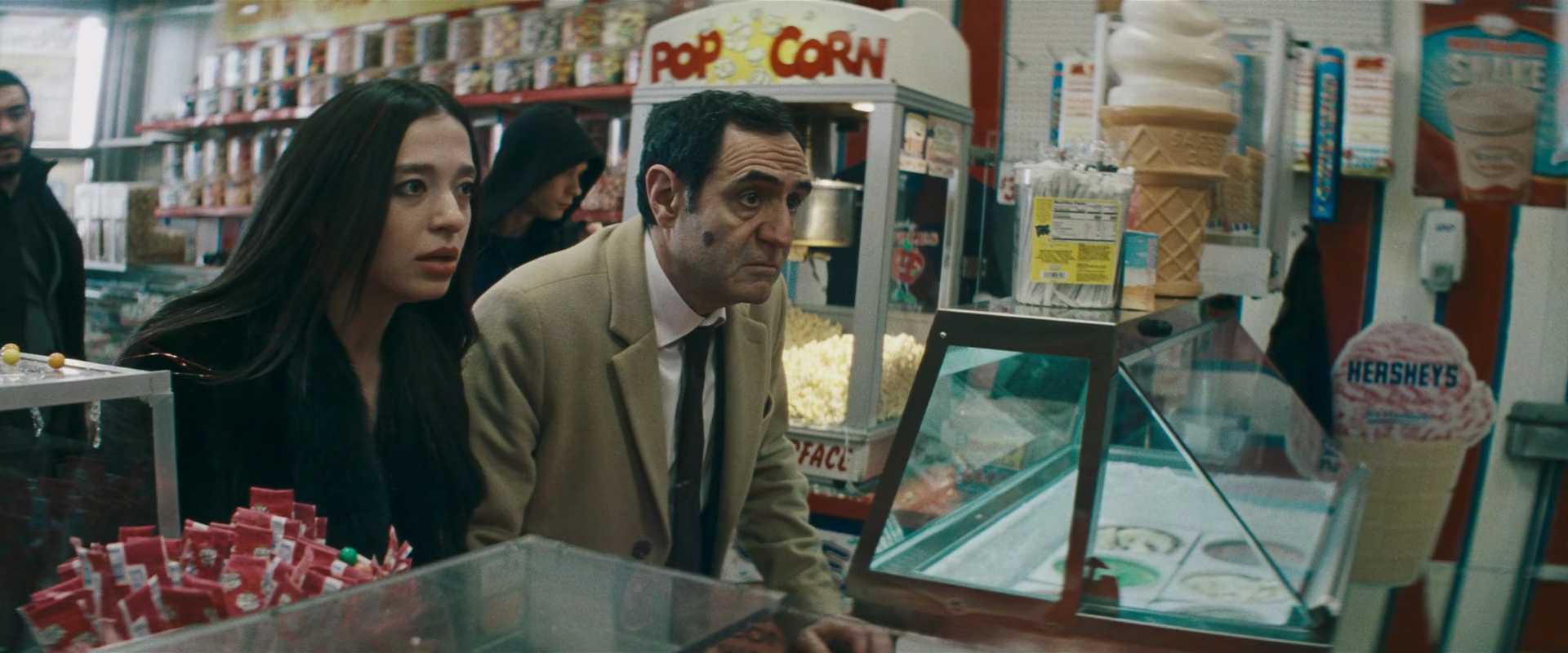
But is is also here, through the film’s comedic tone, that the intent of Anora falls apart. Baker aims for social commentary, telling a story about a poor sex worker who becomes entangled in the all-too-powerful world of money – a world that does nothing but bash her from start to finish. The first 45 minutes are about Ani falling under the spell of money, while the rest of the film focuses on the world around her treating her like dirt, making fun of her naivety, her gullible nature. It makes for great laughs, but is there more to it than just comedy at the expense of a disenfranchised character? And especially about a character who is supposedly street-smart and doesn’t take shit from anybody? How could a character like that fall so easily for a spoiled brat who makes it abundantly clear he will do anything in the name of fun, including marrying a stripper he just met in a club? It is not about believability, but about the film’s questionable treatment of its protagonist – Ani never stood a chance and yet film seems to indulge in her cluelessness.

There has been plenty of texts written about the depiction of sex work in the film and I will not be adding to the conversation, aside from the fact that the entire premise to the film (stripper meets Russian oligarch, spends a few nights with him and gets married) works as set-up for a joke. And Ani is the punchline, just like many other characters in Baker’s filmography are. Their downfall is written in the stars and can be seen from miles away, so if you stop and think about it, what’s the point? What lies at the core of this predictable character arc that is repeated over and over again in Baker’s body of work? Some have argued that it is about the fallibility of the American dream; Ani deludes herself into thinking that she has finally hit the big time, that her life will be a life of comfort and privilege from now on just to see it all be taken away from her at the snap of a finger. The same can be said about Red Rocket and the protagonist’s mission to re-enter the adult film industry which ends, predictably enough, in a catastrophe. The problem is that Baker’s critique is shallow and doesn’t work as well as his comedy. Watching his characters fail time after time is great fun but it stops at that. This is a shame because the potential is there: Baker has an incredible eye for settings and the individuals he finds in the scouting process always make for interesting on-screen personas. The genuine and authentic faces he finds are the reason his films aim higher than they really should.

The biggest issue I have with Baker is that he shoots for the stars while being an extremely lazy storyteller. He thinks his movies are an expansive canvas for the marginalized members of American society, but at the same time his stories are often restricted to very episodic, borderline cartoonish skits and exchanges (except for The Florida Project which for the most part relies on a compelling cast of real life characters and takes its time to tell a simple story only to be undermined by an obvious reveal at the end). Anora is supposed to be a portrayal of the worrying influence of foreign money – something which has been talked about a lot in recent years given Russia’s status as a war-mongering, imperialist nation with dealings in all facets of Western society – but you would never know it from the film’s reliance on countless slapstick situations. Only near the end of the film does Baker try his hand at a more earnest tone, in an attempt to convey the film’s importance. This pretension, however, fails. Because his characters have been reduced to grotesque caricatures; the Armenian goons never come off as human; the Russian oligarch family is as fucked up as we thought and Ani ends up being the helpless victim she was at the start of the film.
It is all too trite and easy on the eyes for a film that has been talked about in the same vein as Fellini’s Nights of Cabiria (certainly a big influence on Baker). The difference is that Fellini was genuinely interested in his protagonist’s struggle, her dreams of love and stability, whereas Baker is not. When Anora ends, Baker wants you to feel something. But how can you feel something if you don’t know the first thing about Ani? How can you feel sorry for her crushed aspirations if you can’t even name them? The only thing you can do is feel mild disappointment, but that wasn’t really Baker’s goal, was it?

One of the film’s gravest mistakes is the insertion of the brilliant Yuiriy Borisov as the taciturn Igor – a Russian goon who is supposed to help the two Armenian brothers, Toros and Garnick, in the search for Ivan. Igor serves as the audience’s stand-in as he watches Ani be mistreated and fight the oppressive forces around her. He pities her, spending most of the movie in a state of complete infatuation with the young stripper, regardless of her constant insults directed at him. He is supposed to be our fly on the wall, recording every injustice suffered by Ani. What that does is it betrays Baker’s intentions. It forces the movie into a corner where it begs the audience to be taken seriously. Borisov is great, his eyes say a million things, and he’s getting rightfully recognized for his excellent performance. However, his presence does nothing but further underline how desperate the film is to be something it is not while failing to deliver us the goods in the form of a thought-provoking critique of modern capitalism. Baker is too busy staging improvised comedic sequences to offer anything meaningful to chew on. You spend more time laughing at Ani’s misfortunes than you do feeling sorry for her, and you spend way too much time enjoying all hell break loose to come away with some constructive conclusion about the movie’s presumably honorable intentions. That wouldn’t be a problem if Igor wasn’t in every scene, acting in the audience’s interest. His silent stare calls for outrage, but outrage at what?
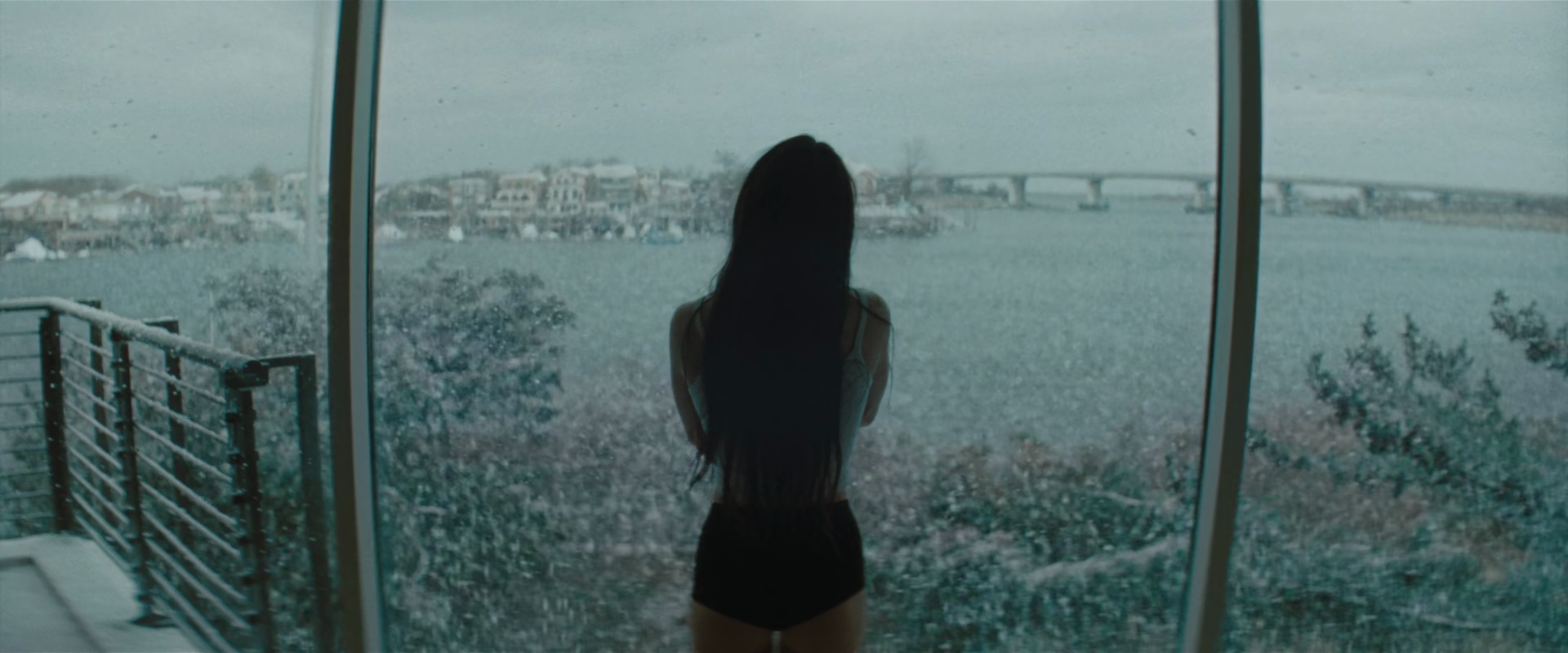
The film never really confronts this injustice and certainly never gives us enough of a reason to root for Ani as a human being. The character of Ani solely works because of Madison’s committed performance. Baker seems to live and die by his technique of not working with a finished script. The filmmaker famously uses only a very broad outline and works closely with the actors, allowing them to improvise and write their own dialogue. This is a compelling way of creating organic characters and genuine interactions with a world where fantasy bleeds into the reality Baker is so busy documenting.
Problems arise when these characters lose their purpose, their raison d’être. If you don’t have a clear understanding of the marginalized protagonists in Baker’s films you are bound to feel lost in their motivations. Their stories then become parodies rather than insightful character studies. Anora – to a large extent – feels like a cartoon for adults. The stakes are never clear and the dramatic beats are basically non-existent, yet the movie asks us to identify with the 25-year-old stripper.
It is not surprising that by the end of every movie of his that I watch, I feel cheated by Sean Baker. He is a talented artist with a good eye for forgotten communities and simple stories of people getting squashed by the system. But he thinks too much of himself while refusing to delve deeper into the lives of the people he supposedly cares about.
He uses Fellini and Cassavetes as models though he seems to forget that what made their films tick was their inquisitive, empathic nature. In Fellini and Cassavetes’ filmography every character deserved a fair chance, and the last thing both filmmakers wanted was for the audience to laugh at the characters’ circumstances. Their goal was to create a link between characters and audience. No such link can be found in any of Baker’s films, and that’s a shame – because the potential is there.
People want to feel they’re not alone in this world – why laugh at this shared sentiment? Why punch down?
To what end?

 LIFEFILMLOVE