
Everybody’s a piece of shit. The world is simply divided into those who know it, and those who lie to themselves. That is – more or less – the fundamental rule in Luca Guadagnino’s immensely entertaining film of this year, Challengers – the story of a doomed love triangle involving self-centered, egotistical tennis pro’s and their pursuit of personal glory.
Challengers is, for better or worse, one of the most accurate depictions of a sentiment that is becoming increasingly prevalent among people whose only way to cope with the shape-shifting world they’re a part of is to beat their neighbor as if they were their sworn opponent. It is entertainment 101 – an engrossing look into the lives of cynics whose entire purpose in life is to be better than others. Because if you’re not, then who gives a shit? In an era where every character trait is dissected and subject to tired moralizing (“Why are we watching evil, selfish people do things?” “Why do we care what these people think/do?” etc) by a society that is largely lacking in media literacy, Luca Guadagnino emerges as one of the few contemporary filmmakers interested in studying trends among the new generations of people who would gladly sell their own mother for clout without ever losing sight of the fun that is to be had from it.
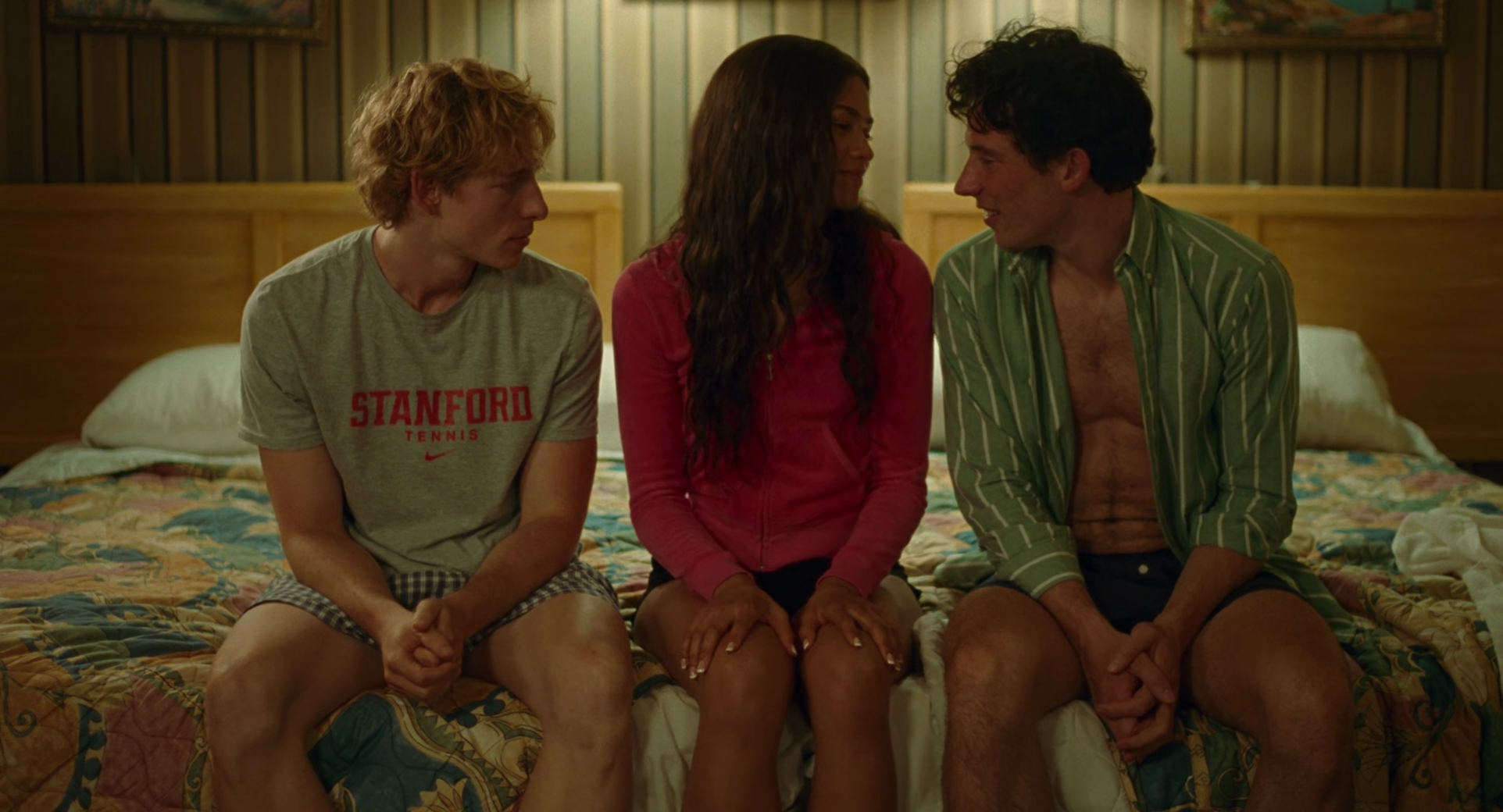
Like a lot of Guadagnino’s work (including Call Me By Your Name, Bones and All and the mini-series, We Are Who We Are) Challengers is a movie about youth in decline. Young people with nothing more to gain but everything to lose, and rapidly so. The threat of an unfulfilled life is not merely looming over them – in Guadagnino’s film it is a reality that permeates every decision they make, every gesture and every tic that makes them who they are. The love triangle is composed of Patrick Zweig (a magnetic Josh O’Connor) and Art Donaldson (an equally good Mike Faist) – two promising tennis players who have been best friends since boarding school – and Tashi (a brilliant and ruthless Zendaya in her meatiest role to date) – the college tennis champion who will set fire to their friendship.
What could have been a predictable rise and fall scenario is instead wedged into a series of erratic and explosive vignettes meant to bring to light the visible patterns of cynicism our three leads tend to give themselves up to. The film works as a collection of moments entirely focused on the nature of our characters – a rarity in today’s cinema where plot and action rule all. Guadagnino indulges in the perverse selfishness of the doomed trio. That is where the fun lies.
To summarize Challengers is nearly an impossible task: the film recounts the falling out of two best friends and the woman who inspires both to strive for greatness. Tashi is their obsession and in the hands of someone like Alfred Hitchcock she may have been made out to be a divinity, an untouchable fantasy free of human frailty and immune to weakness, be it physical, emotional or mental. A vision. An apparition. But in Guadagnino’s hands, Tashi is a power-hungry loser, just like the two boys chasing after her. The only difference is that she has ambitions that go beyond physical or emotional pleasure.
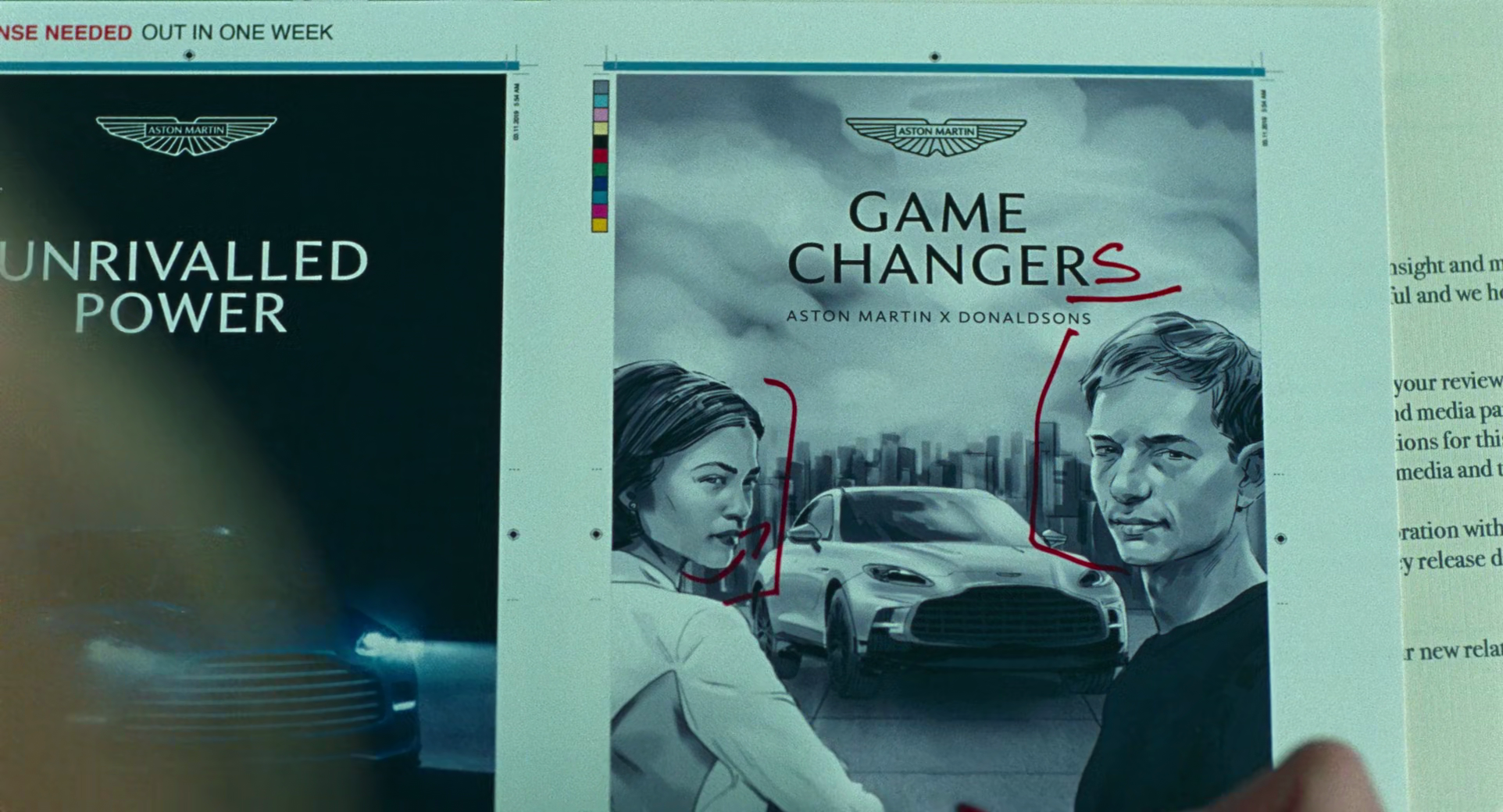
Tashi is able to exert control over anyone – in comparison, Art and Patrick are mere amateurs with prospects that do not go beyond the act of hitting a ball with a racket. They see themselves for who they are: sportsmen with no drive for higher things than that. As talented as they both are, Art and Patrick do not see what Tashi sees in tennis – to them it is only a vehicle for self-fulfillment, whereas to her tennis is everything. Tennis to Tashi is like oxygen, it is what makes the world go around; “For about 15 seconds my opponent and I were actually playing tennis and we understood each other completely. It was like we were in love,” she muses to the two boys ogling her. “Or like we didn’t exist.” She utters this line the first time we meet her: the line remains a rare glimpse into the soul of a person who otherwise spends the rest of the movie treating others as mere accessories in her journey to success, treating tennis like business; a chance to get her name on the latest Aston Martin poster.
Justin Kuritzkes, the writer behind the movie, creates chaos out of the repressed, pent up anger raging inside his characters and the appearance they must keep up for the sake of their reputation. Kuritzkes presents tennis as a spectacle of good manners and subdued emotions, where winners and losers must mask their emotions in the name of sportsmanlike conduct and to avoid upsetting the audience of country club members. It is the perfect set-up for the melodrama to follow. Because both Kuritzkes and Guadagnino understand something very important: laughing at your own characters only works when you do not underestimate their range of emotions. You can’t make a compelling critique without giving depth to what makes them who they are. There has to be substance even in the most shallow of characters. Shallowness is also a trait. And so is cynicism – to see the movie’s protagonists wallow in it is a guaranteed pleasure thanks to Kuritzkes’ sharp, over-the-top dialogue and Guadagnino’s camera and its ability to embrace the emotional violence the characters inflict on one another.
Everyone wants something. That is David Mamet’s famous golden rule for a good script – everyone must want something and the story has to follow their pursuit of that thing. Well, in Challengers everyone wants something different at the cost of hurting the other person.
Art – the placid, ultra-talented of the bunch – wants Tashi. He wants to live for her. Tennis is his way of expressing this sentiment of utter devotion to the woman who goes from being a simple crush to wife and mother of his child. He wants her so bad that he will not think twice about ending his friendship with Patrick.
Patrick, on the other hand, wants to release himself from the clutches of his family’s wealth and have a shot at making a name for himself on his own terms. To do this, he is willing to compromise every single relationship he’s had with just about anybody, including Art and Tashi. The people he meets are used as commodities – the girls he dates, he dates because they offer him a place to sleep, that’s it.
Tashi, too, sees others as means for her own glory – her hopes for a brilliant career in sports are dashed the moment she ruptures her leg. This will result in her placing all of her unrealized dreams in Art – her lapdog, her batting arm.
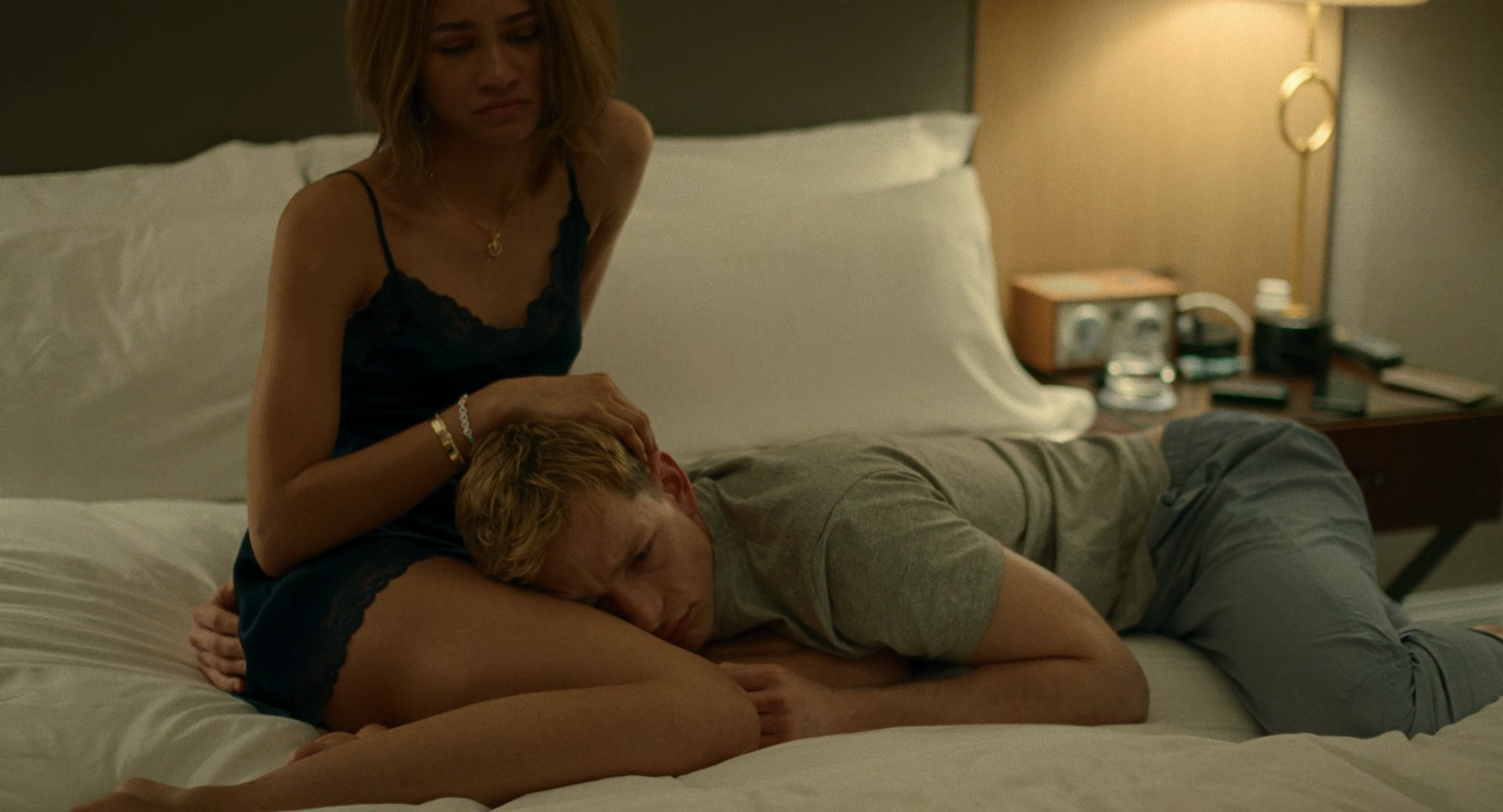
In theory, that should be it, right? Make fun of them, laugh at them, point fingers at their self-centeredness and vanity. After all, these are shitty people. They deserve everything that’s coming to them. They deserve each other. But Guadagnino knows better. Guadagnino knows that there is real pain and insecurity hiding behind those shining smiles and eyes of steel. There is fear of fading into the abyss that is early retirement behind those good looks and well toned skin.
That’s the case for everyone involved – Tashi is running her husband into the ground, calling him a bitch if he dares to pull out of the latest tournament because that would comprise her vision of their life together; Art is terrified of his wife not loving him, which is the only thing that keeps him from quitting tennis; and Patrick is scared shitless of ending his career trophyless, ranked 271st in the world, sleeping in the backseat of his car for the remainder of his days.
Seeing these characters struggle with themselves and each other is what makes Challengers an entertaining series of sequences that hold the same power as a gun duel in a Western. In each of these sequences there is a stand-off between individuals who know what they want but fail to confess what they fear. Guadagnino acknowledges this inner turmoil which makes scenes such as Patrick trying his luck on a date doubly funny.
Patrick, after all, doesn’t care about having sex with anyone except Tashi – the only woman whom he cannot have. After barely being able to afford gas for his car, he goes on a Tinder date with a woman whom he has no interest in. This is obvious to us and to the girl in question as well. Patrick only wants a place to crash. The girl starts telling Patrick all about her profession. A stream of nonsensical words follows with Patrick looking the other way, bored out of his skull, and seeing, across the other end of the bar, Tashi (who happens to live in the same hotel where the date is taking place), still beautiful as ever, still pissed off at him. Patrick completely ignores his date and jogs over to Tashi. The two have a brief conversation, for old time’s sake.
The chance meeting ends with Tashi saying, “Stay the fuck away from us,” after which Patrick spins around, goes back to his date and doesn’t even explain himself. Instead, he surges forward, sticking his tongue down her throat. She blissfully exchanges the kiss, charmed by his bluntness. After all, he’s only looking for a place to crash the night. And Patrick will do anything not to sleep in his car.
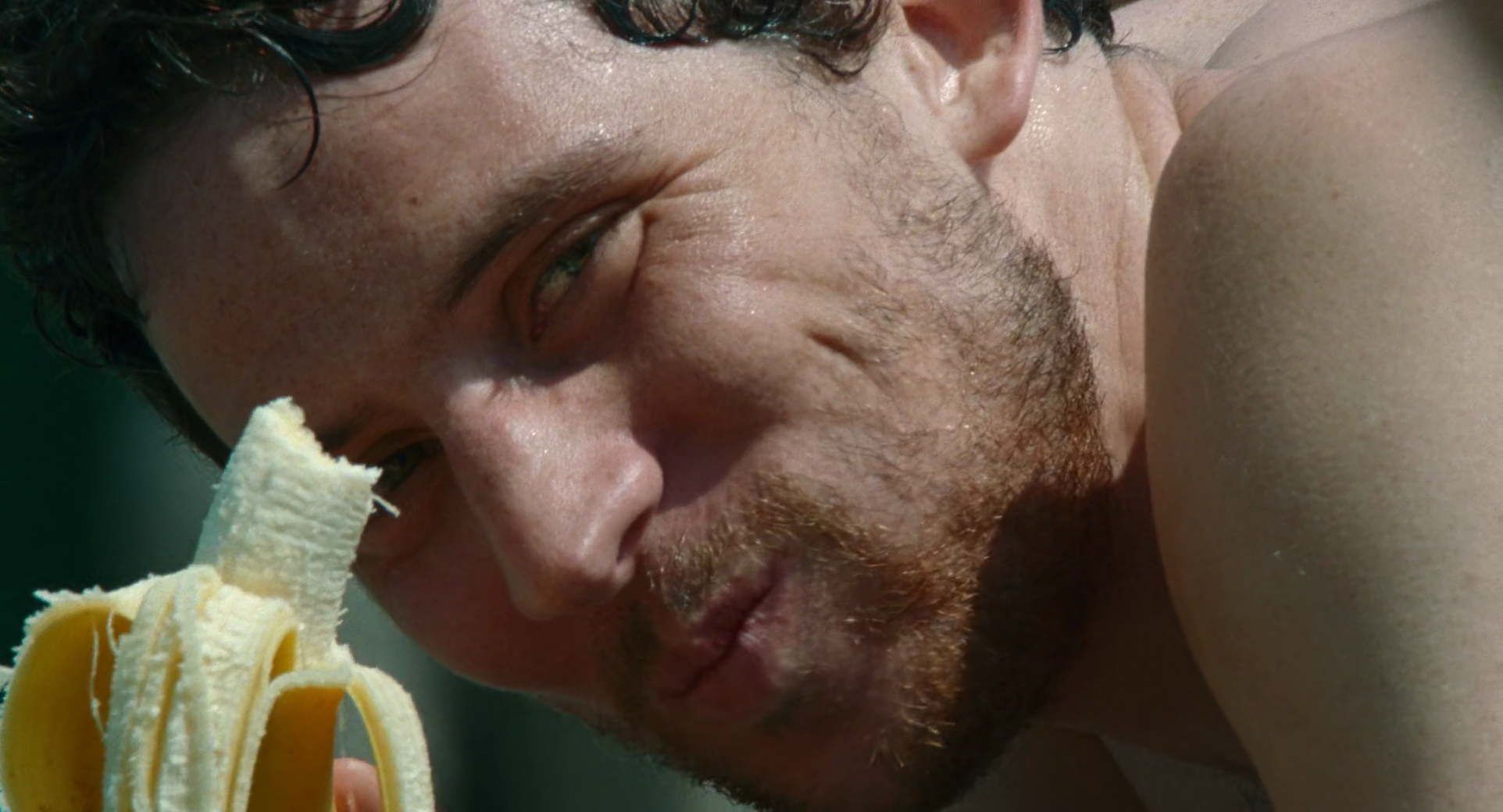
None of Guadagnino’s sharp observations would land without his energetic framing and cuts. Guadagnino knows he’s making a sports movie – there is an endless supply of tired tropes that have been recycled over the years when it comes to a genre that is only concerned with winners and losers, the favorite and the underdog. Guadagnino makes sure to avoid this.
The messiness, the ruptured lives of our characters and the clash of egos have Guadagnino spin and move his camera as if it were a tennis ball (which indeed happens during a very special sequence near the end of the film) spying on its owners. He doesn’t go for the tear-inducing emotional shots of sacrifice à la Chariots of Fire. Nor does he care for the uplifting montage of Rocky with Stallone running up those steps as proof of his inherent greatness. Instead, Guadagnino goes another way – he becomes fascinated with the pretension in the world of tennis. He mocks its appeal and cleanliness and gives us palpable images of horrible people wanting nothing more than to destroy their opponent. Their enemy. They scream, they moan, they smash their rackets into smithereens. They breathe fire and live through the sheer hatred of defeat.
Guadagnino also knows that a sports movie must focus on the physical aspect more than anything else. Movement, sweat, pain, blisters and broken bones are must-have’s when it comes to depicting the lifestyle of people fueled by the ability to take their bodies to the extreme. It is a spectacle to be marveled at in the same way crowds swarmed to watch gladiators fight to the death.
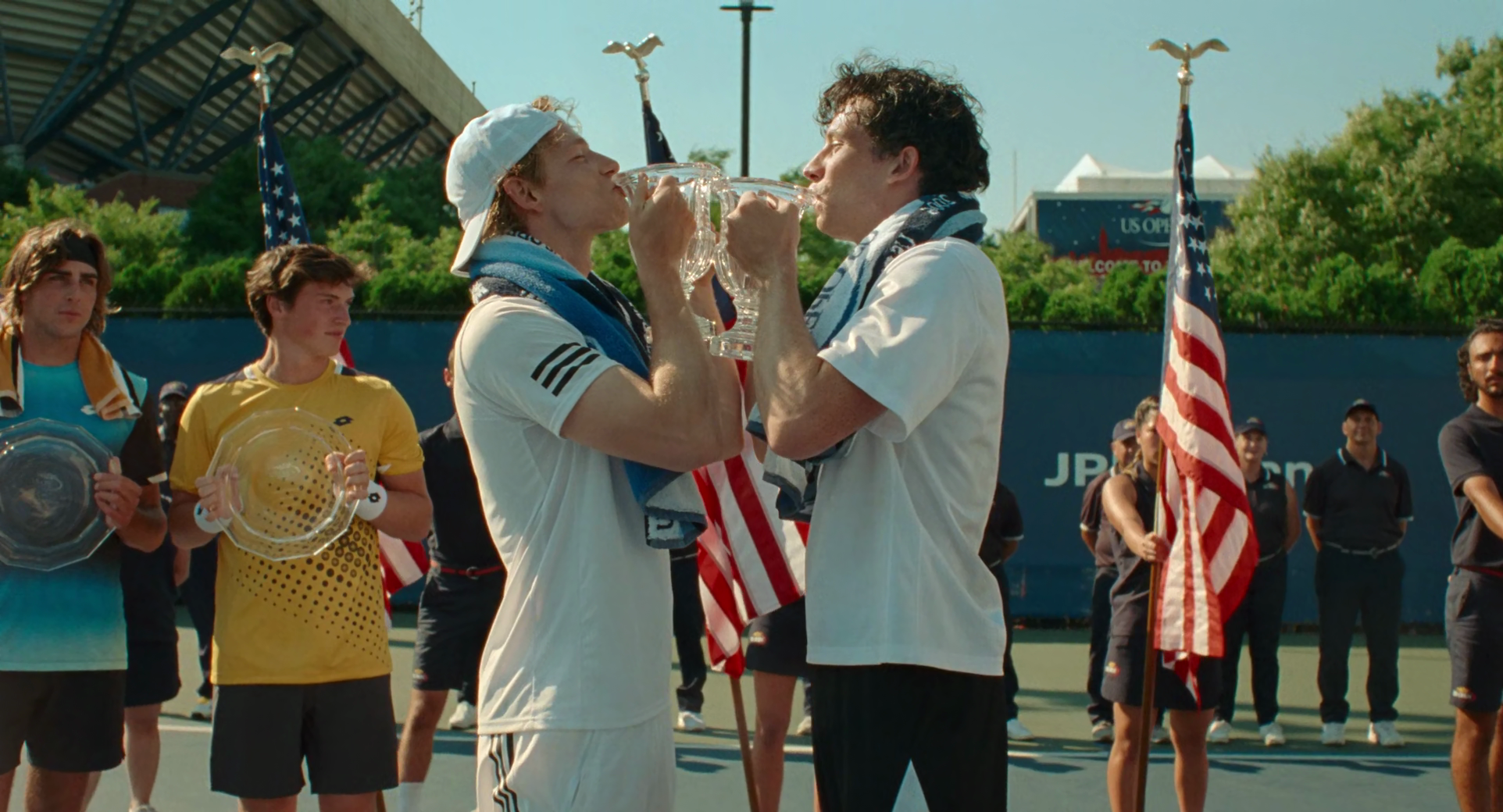
And so it is – Guadagnino centers the film around a final showdown between Patrick and Art. The former friends are to square off in match that will determine everyone’s fate – including Tashi who is watching from the stands. The stakes only become evident as the movie progresses. What we initially think of as just another display of bravado soon turns into a veritable battle of titans. When we finally know what each one of them stands to lose, that is when Guadagnino turns it up and lets loose. Because the real drama is in the characters’ false image they project – an image that is the product of a lifetime of lies, of misunderstandings, grudges and deceit.
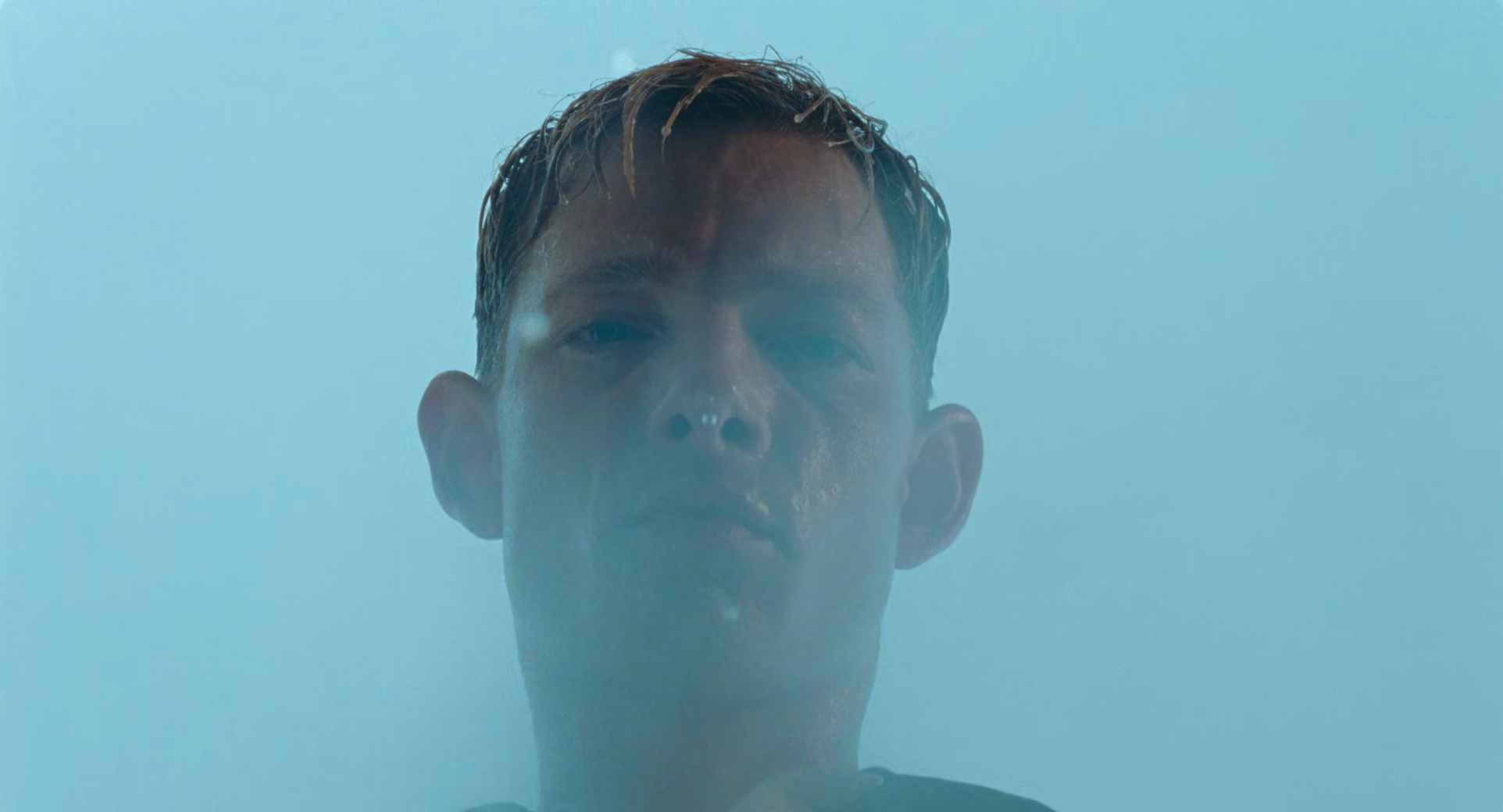
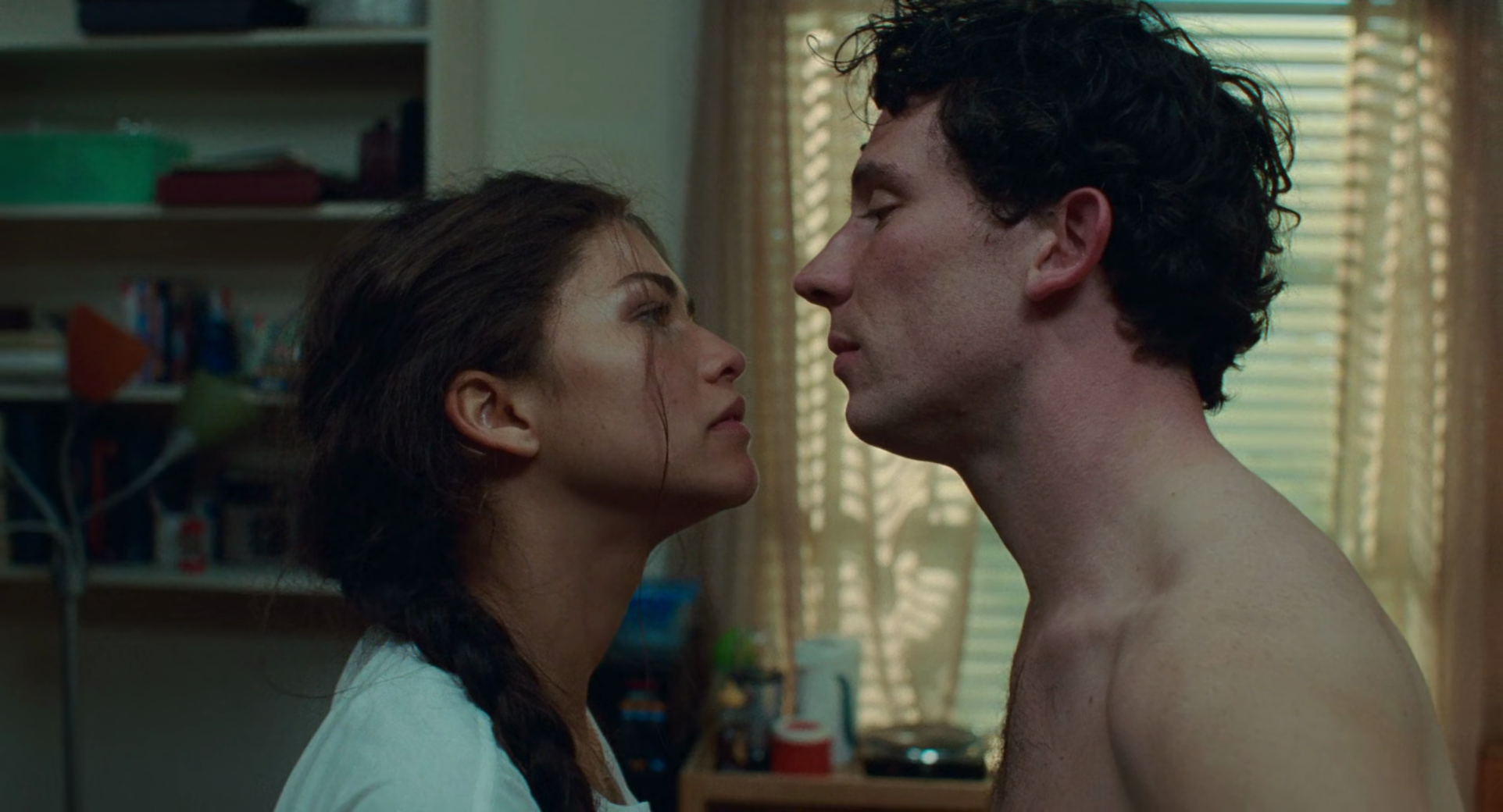
My review wouldn’t be complete without mentioning the most important quality of the film: its playfulness and simultaneous maturity in showing the importance of sex. Sex as a means of exploitation when seen from the perspective of cynical beings such as Art, Patrick and Tashi. In their minds, sex is a weapon. It is to be used sparingly to achieve predetermined goals. Otherwise you risk catching feelings, and what can be worse than being in love? It would signify the end of one’s own professional career.
Art is the closest to this kind of ‘sentimental downfall.’ His love for Tashi – or rather, his adoration for her – is what ultimately strips him of his will to fight and win. And for Tashi love is only another way of saying you don’t want to live anymore. You might as well pack it up and go die. Loving someone comes at the cost of lots of things. Loving Patrick, for Art, for example, would come at the cost of losing Tashi.
Tashi already lost her biggest love – the love of the game – the day her knee broke. Marrying Art was just another way of extending the illusion of still having a say in tennis matters.
And Patrick? Patrick may be the worst of them all because he actually recognizes this about himself and others around him – this need to obliterate any signs of weakness and suppress the genuine array of emotions he holds inside. “I’m stupid. I know. I’m just not as disturbed by it as you are,” he tells Tashi. Patrick – in spite of his constant running away from accountability – is the only one capable of admitting what a sorry excuse of a human being he really is.
All three characters have feelings, but they are buried so deep, underneath so many layers of bullshit that they convince themselves of their own grandiosity – that is the reality of a youth in decline. That is the reality of our time. Should we laugh, or should we cry?


